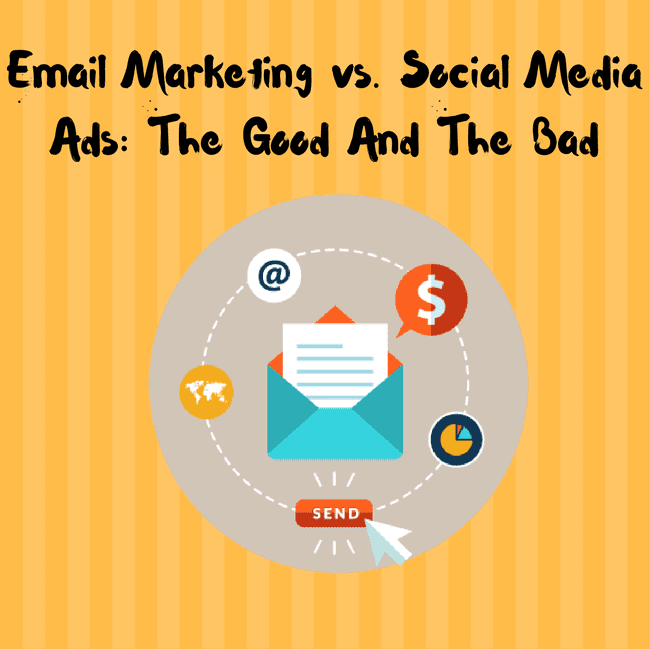
Not long ago, small businesses got the word out with newspaper ads, the phone book, and a stack of brochures. Today, two channels do most of the heavy lifting: email marketing and social media ads. Both started as something else entirely. Email was for memos and messages; social platforms were for sharing vacation photos. In 2026, they are two of the most reliable ways to turn strangers into customers.
So which one deserves your time and budget? The honest answer is "both, but for different jobs." Here is a clear look at the good and the bad of each, plus how they work better together.
Why email still rules
Reports of email's death have been wildly exaggerated. In 2026 there are well over 4.5 billion email users worldwide, and that number keeps climbing. Almost everyone who buys anything online has an inbox, and most people check it every single day.
The real advantage is ownership. When someone joins your email list, you own that connection. No algorithm decides whether your message gets seen, and no platform can shut it off overnight. Email also remains the conversion king: it consistently delivers one of the highest returns of any marketing channel, often cited around $36 to $40 back for every $1 spent.
What makes email good:
- Direct and personal. Your message lands in a private inbox, not a crowded feed.
- You own the audience. No rented reach that can vanish with an algorithm change.
- Smart automation. In 2026, AI tools help you write subject lines, segment your list, and send the right message at the right moment.
- Measurable. Opens, clicks, and sales are easy to track and improve.
The downsides are real too. You have to build a list from scratch, which takes time. Inboxes are crowded, so weak subject lines get ignored. And privacy rules plus spam filters mean you must earn permission and keep your content genuinely useful.
Why social media ads grab attention
Social media ads do something email cannot: they put you in front of people who have never heard of you. On Facebook, Instagram, TikTok, X, LinkedIn, and Pinterest, you can target by location, interests, age, and behavior, then show up right where your future customers already spend their time.
In 2026, the action is in short-form video. Reels, TikToks, and YouTube Shorts dominate attention, and platforms reward businesses that post snackable, authentic clips. Social commerce has matured too, with in-app shops and checkout letting people discover and buy without ever leaving the app.
What makes social ads good:
- Massive reach. Find brand-new audiences fast, even with a modest budget.
- Precise targeting. Reach the exact people most likely to care.
- Visual and shareable. A strong Reel can spread far beyond what you paid for.
- Quick feedback. You see what works within hours, not weeks.
The catch: you are renting that attention. The moment you stop paying, the visibility stops. Ad costs have risen, results swing with platform changes, and running campaigns well takes ongoing testing and creative work. Social is fantastic for getting noticed, but a like is not a sale.
The smarter move: use them together
Treating email and social ads as rivals is the most common mistake we see. They are partners. Social media ads fill the top of your funnel by introducing your business to people who do not know you yet. Email nurtures the bottom of the funnel, building trust until those people are ready to buy and come back again.
Here is the loop that works in 2026:
- Run a social ad or short-form video to reach a new audience.
- Offer something worth an email address, like a discount, guide, or quick tip.
- Welcome new subscribers with a friendly email sequence.
- Keep showing up with helpful, on-brand content on both channels.
One more 2026 angle worth your attention: AI search and answer engines. More buyers now ask tools like ChatGPT, Perplexity, and Google's AI overviews for recommendations. Consistent, useful content across your social profiles and your emails helps your brand get mentioned and trusted in those AI answers, which feeds right back into both channels.
The bottom line
Social media ads are your introduction. Email is your relationship. Lead with social to be discovered, capture interest with an offer, then let email do the patient work of turning that interest into loyal, repeat customers.
If juggling both sounds like a lot on top of running your business, you do not have to do it alone. A done-for-you service can handle the posting, the targeting, and the consistency so you can focus on your customers. That is exactly what $99 Social helps small businesses do every day, with affordable plans and white-label options for agencies too.